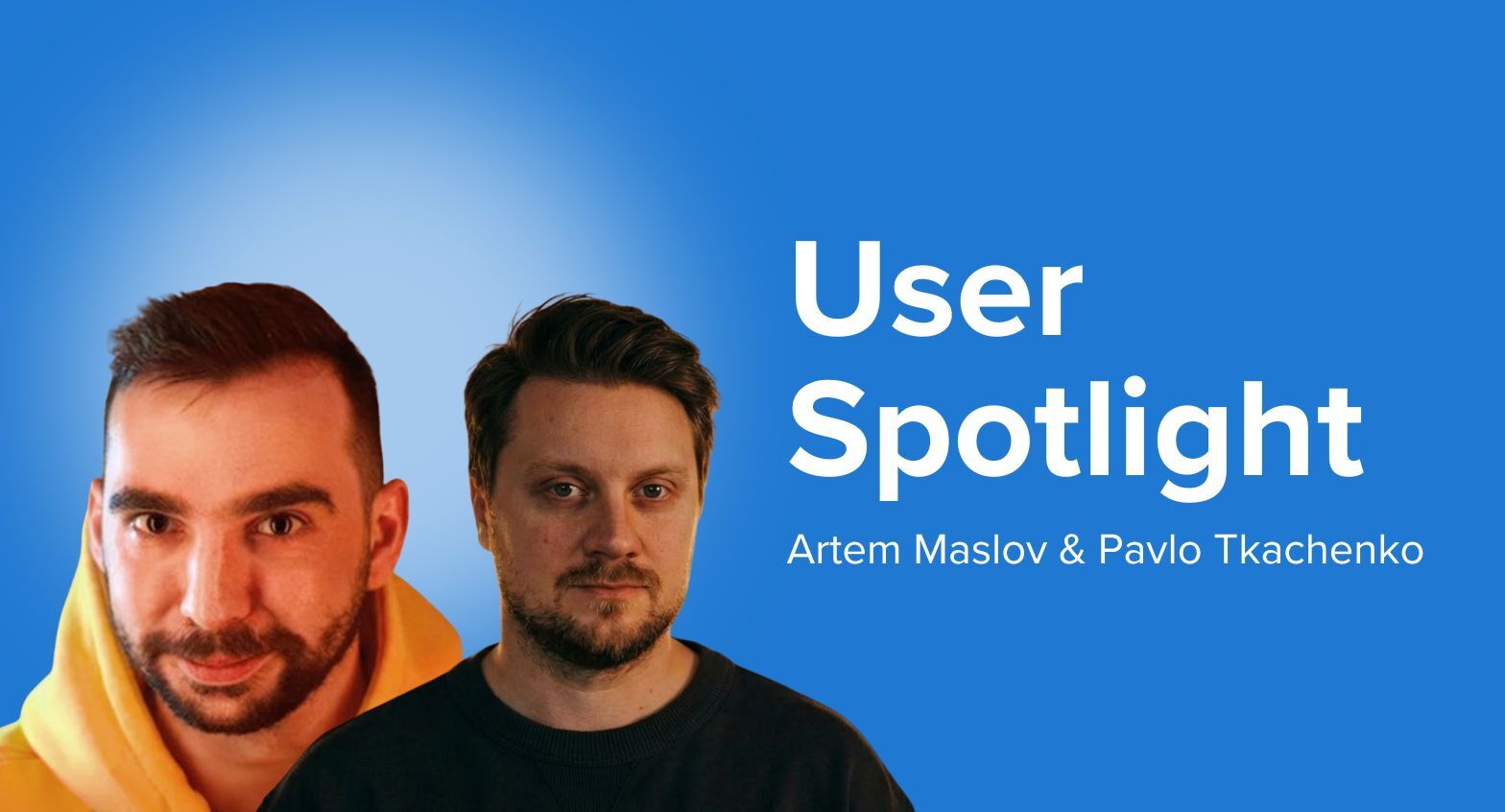
When Pavlo Tkachenko and Artem Maslov decided to team up for the Meta Horizon Creator Competition: Mobile Innovation hackathon, they had just one week before the deadline.
Pavlo, an XR developer in Belgium, had been tinkering with a physics simulation for a raft. Artem, an art director and 3D generalist based in Canada, saw the prototype and immediately wanted to contribute.
What followed was a compressed sprint that produced a winning project and reinforced what both had learned about collaboration under pressure.
The build: A physics-based raft steered by body weight
Their raft game is deceptively simple: players stand on a floating platform, using their physical positions to steer through obstacles. Survive longer, score higher. But beneath that mechanic lies a philosophy about building together, both in virtual spaces and in hackathon teams.
5 Lessons from their 1-week winning sprint
When Pavlo and Artem started their project, they were fighting the clock—but they used it to their advantage. With only one week to ship, they moved away from "feature creep" and had to be ruthlessly focused. Here's how they turned a time-crunch into a competitive advantage.
#1 Constraint as a compass
When you’re limited on time, you have to limit your focus. Don't try to do everything.
They picked a niche—cozy visual design combined with tight physics—and owned it. The team focused on a specific category that was complementary to their skills: visual design and 3D art.
#2 Mechanics should mirror your mission
If your goal is collaboration, your gameplay shouldn't just "allow" it—it should demand it.
They built a raft where every player's physical position impacted the steering. To survive, you didn't just play; you talked. You shouted "move left" or "stay center." The collaborative mechanics in the gameplay mirrored their collaborative process.
{{callout-1}}
#3 The "1 + 1 = 11" Rule
In a one-week rush, you cannot afford friction. Collaboration succeeds when you stay out of each other's way.
They divided labor by expertise: Pavlo handled logic and physics; Artem handled visual polish. They worked in parallel, trusting each other’s specialty to eliminate the feedback loops that kill momentum.
#4 Play to your strengths (and the prize)
Hackathon winners read the fine print. If your goal is winning, target the win, not just the finish line.
They didn't build a generic app; they targeted specific nominations that aligned with their 3D art skills.
"We do what we are best at," Pavlo says. "It's the difference between being a participant and being a contender."
#5 The antidote to unfinished projects
The real value of a hackathon isn't the prize money—it's the delivery. A hard deadline forces you to kill perfectionism.
A hackathon provides the urgency of a hard deadline. It forces a result that you can push to socials, put on a resume, or use to land an interview. It can turn an idea into a shipped product in 168 hours.
The paths that led here
The lessons above didn't come from a playbook. They came from two unconventional journeys that happened to converge at the right moment.
Pavlo: From the bridge of a cargo ship to virtual worlds
Pavlo spent eight years studying at a maritime academy in Ukraine, and then worked six years on vessels, rising from cadet to second officer. The work was steady, but something didn't fit.
"Maritime work is super disciplined, aligned lifestyle," Pavlo explains. "You know what you will do tomorrow, and the day after. At some point, I realized that it's not fully working for me."
What started as a hobby in 3D graphics during his time at sea became an escape route. The transition wasn't smooth—there were tough periods with no income—but he had support from people who believed he could make the switch. He started building AR experiences when Spark AR emerged, entered his first Devpost hackathon in 2020, and gradually moved deeper into XR development.
There's something fitting about him building a raft game set on the ocean.
"You see a little bit of maritime in my projects," Pavlo acknowledges.
"I miss the sea, the view, the vibe, the skies."
{{callout-2}}
Artem: From Snapchat to a global collaborator
As a former concept designer and art director at Snapchat Ukraine, Artem spent years building AR experiences for a global audience. He eventually left to start his own studio focused on 3D production, NFTs, and AR.
When the war began, Artem immigrated first to the Netherlands and then to Canada. He and Pavlo had been following each other's work since 2019, connected through the XR community.
"I thought that I could participate in this hackathon and could win it, given my nine years of experience in the industry," Artem said.
"From the first view of Pavlo's prototype, I thought it was unique. The simulation of physics and the script that moves the raft in a physical way looked pretty impressive."
How they built the space
Together, they created more than a game mechanic. They built a place. An island lobby with a fireplace where players could hang out between runs. Two leaderboards—one for survival time, one for points—so players could compete in different ways. Original music tracks for the lobby and gameplay. Even an Easter egg: a volleyball with a handprint next to the campfire, a nod to Cast Away.
"You're never alone on this island," Pavlo says.
The result
Pavlo and Artem's raft game won in the Meta Horizon hackathon. Pavlo continues building in the XR space from Belgium, now focused on Snapchat Spectacles development. Artem is exploring new platforms from Canada. Their takeaway? When complementary skills meet a hard deadline, one week is all you need to build something world-class.
Feeling inspired to build something amazing? Check out our hackathons happening now!